
CCRIF Launches the Livelihood Protection Policy… A New Era of Inclusive Climate Resilience
On December 1, 2025, CCRIF SPC officially launched the new Livelihood Protection Policy (LPP) in the Caribbean, marking a major milestone in the region’s efforts to close the protection gap for low-income and climate‑vulnerable groups. The virtual launch brought together partners from CCRIF, MCII, the ILO’s Impact Insurance Facility, Guardian General Insurance Jamaica Limited, and CelsiusPro, alongside community representatives and regional and international stakeholders. Over 300 persons attended the launch.
The launch comes in the wake of Hurricane Melissa, which left thousands of Jamaicans- farmers, fisherfolk, vendors, tourism workers, and micro‑entrepreneurs, having to rebuild their lives. While CCRIF provided US$91.9 million to the Government of Jamaica within 14 days under its sovereign parametric policies, Melissa also underscored the urgent need for direct financial protection at the household and community levels. The LPP fills this gap.
The LPP - A Parametric Microinsurance Solution for Those Most at Risk
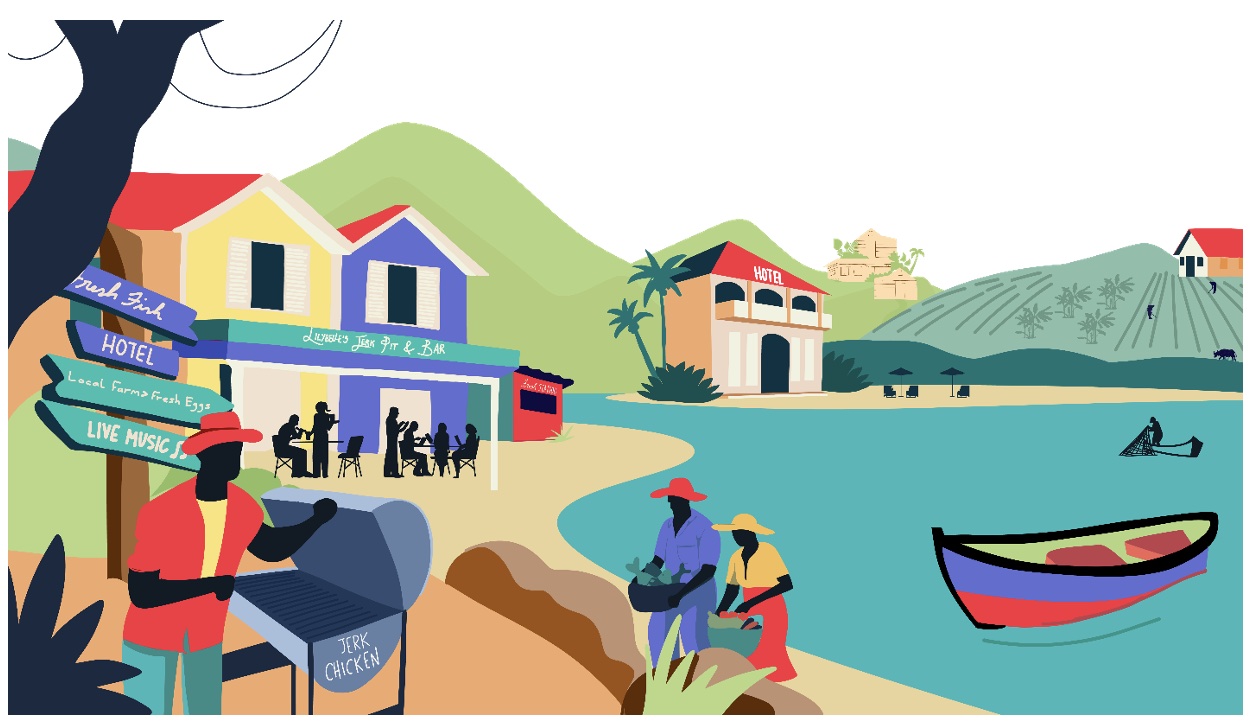
The LPP is a parametric weather-index microinsurance product designed specifically for individuals whose livelihoods depend on daily earnings and are highly exposed to extreme rainfall and tropical cyclone winds. With automatic payouts within days, no claims process, and affordable premiums, the LPP provides a safety net that helps vulnerable groups recover quickly and avoid falling into poverty after climate shocks.
The product is grounded in more than a decade of research and piloting under the Climate Risk Adaptation and Insurance in the Caribbean (CRAIC) Project, led by MCII in partnership with CCRIF and the ILO, with support from the German Government’s International Climate Initiative (IKI). The updated LPP integrates CCRIF’s state‑of‑the‑art parametric insurance models, ensuring accuracy, transparency, and long‑term sustainability.
During the launch, MCII’s Executive Director, Soenke Kreft, emphasized that the LPP represents “a robust, scalable regional asset” and called on insurers, cooperatives, and microfinance institutions to join the effort to expand inclusive insurance across the Caribbean.
CCRIF’s Vision: A Resilience Cascade from Governments to Households
In his keynote address, CCRIF CEO Isaac Anthony highlighted that while CCRIF’s sovereign policies provide governments and utility companies with rapid liquidity after disasters, resilience must extend to households and small businesses.
He described the LPP as part of a “resilience cascade”, that is, a layered approach in which governments receive quick liquidity through CCRIF’s sovereign products, while individuals receive direct payouts through microinsurance. This dual system strengthens national recovery and supports equitable, community‑level resilience. The CEO also underscored the LPP’s gender‑responsive design, noting that women in informal sectors often face disproportionate climate impacts and stand to benefit significantly from this product.
Powered by Innovation: CelsiusPro and the Digital Microinsurance Platform
A key enabler of the LPP rollout is CCRIF’s new Microinsurance Facility and its accompanying digital White Label Platform, developed in partnership with CelsiusPro and its subsidiary, Global Parametrics. This platform will allow multiple insurers to administer microinsurance products efficiently, from pricing and risk capacity management to policy administration and payouts.
CelsiusPro CEO Mark Rueegg noted that the platform “will help build an insurance ecosystem that reaches vulnerable communities across all CCRIF member countries,” supported by the Natural Disaster Fund (NDF), a blended finance mechanism backed by the UK and German governments.
This digital infrastructure will ensure that the LPP can be scaled across the region, enabling CCRIF to work with multiple insurers and distribution partners, including credit unions, cooperatives, and community groups, among others.
How the LPP Works: Fast, Transparent, and Predictable
CCRIF Senior Risk Management Specialist, Dr. Gabriele Coccia explained that the LPP uses the hazard components of CCRIF’s tropical cyclone and excess rainfall models. Payouts are triggered by thresholds at 4 levels (mild to catastrophic):
- Wind speed thresholds
- Rainfall accumulation thresholds over 12‑ and 48‑hour periods
If thresholds are exceeded, payouts of 20% to 100% of the peril-specific sub-limit are issued automatically. A single storm can trigger both wind and rainfall payouts.
A real‑world example from the Hurricane Melissa modelled scenario showed that a seasonal tourism worker in St. James with a US$1,000 policy could have received US$875 in payouts—within days—after the event.
A Regional Vision for 2026 and Beyond
While Jamaica is the first country to launch the updated LPP, CCRIF confirmed that the product will be rolled out in Belize, Grenada, and Saint Lucia in 2026, with plans to expand across the entire CCRIF membership. The LPP is designed to integrate seamlessly into national social protection systems, support financial inclusion, and strengthen community resilience.
As MCII’s Sinja Buri noted in closing, “The LPP is only the beginning. Our goal is to scale this product across the region and continue enhancing it, including exploring future coverage for drought.”
A New Chapter in Inclusive Climate Resilience
The launch of the LPP marks a significant step forward in CCRIF’s mission to close the protection gap and ensure that resilience reaches those who need it most. By combining CCRIF’s modelling expertise, MCII’s research, the ILO’s capacity-building, Guardian General’s local presence, and CelsiusPro’s digital innovation, the Caribbean now has a scalable, people‑centered insurance solution that strengthens livelihoods and accelerates recovery after disasters.
Resilience starts with protecting what matters most — your livelihood and your family.
- Log in to post comments